A practical UK checklist for choosing a method, setting up safely and making room for the whole cook — including the washing up.
Words by The Smoke Log4 min read
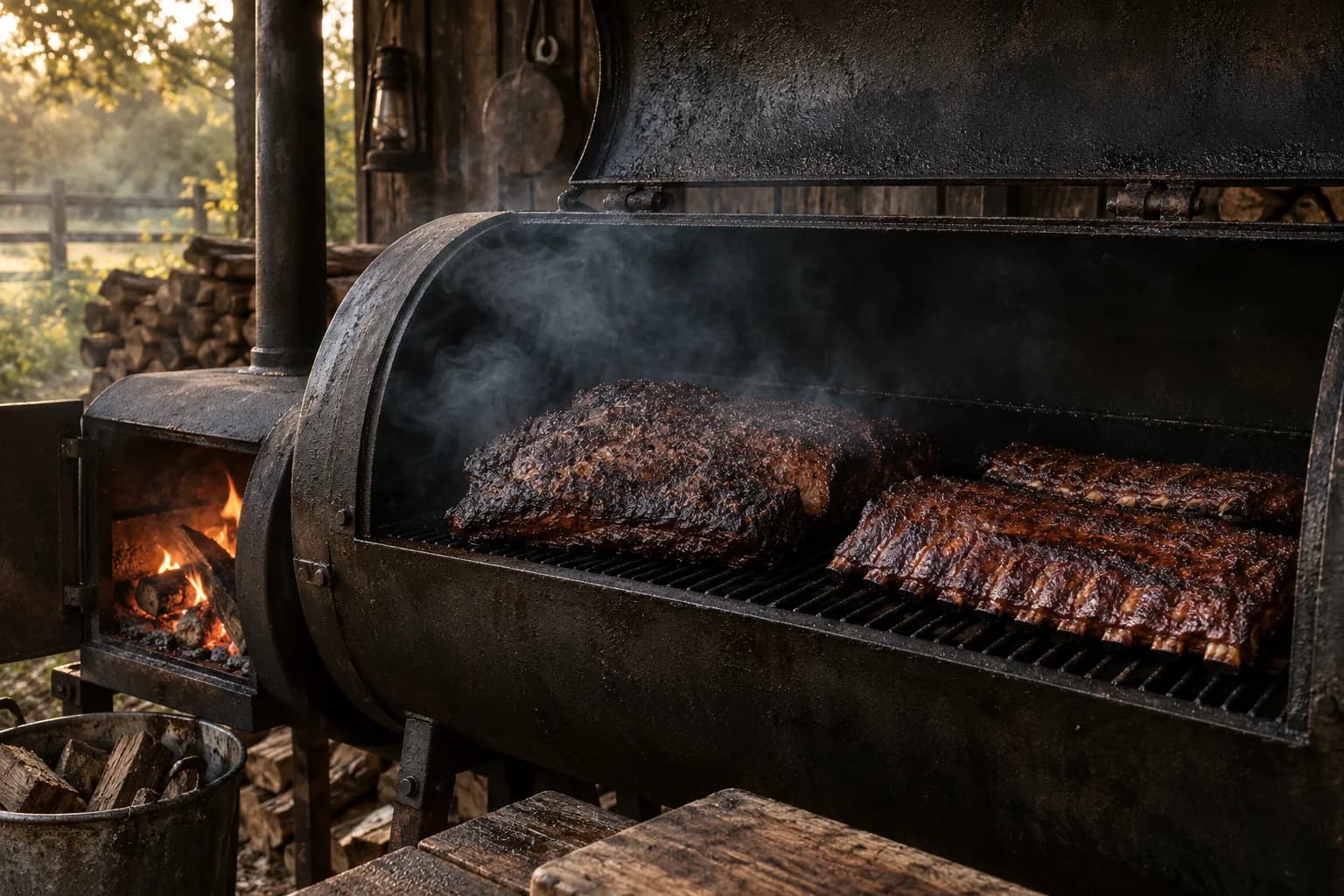
Illustrative image; not a photograph of this cook.
A planning checklist, not a recipe
A first smoking session starts before the fuel is lit. Use this checklist alongside a suitable, trusted recipe and the instructions for your own smoker. It does not prescribe a cooking schedule or replace the checks needed for the meat you choose.
Choose one manageable question
Write down the cut you intend to cook, its weight in kg and the method you will follow. Check that the recipe describes the same type of cut and preparation. A rolled joint and an intact cut are not interchangeable just because their labels contain the same word.
Keep the first plan narrow: one main item and a clear way to record what happens. Note the recipe's cooking, resting and serving instructions before shopping. Leave room in the day to follow the method rather than making a promised meal time the only measure of success.
Check the place and the equipment
Read the smoker manufacturer's instructions for siting, fuel, operation and shutdown. Check its condition before use. London Fire Brigade advises level ground away from things that can burn, no barbecues on balconies or in enclosed spaces, and constant supervision. Keep children and pets away. Never bring smouldering coals indoors: they can release carbon monoxide. See London Fire Brigade's barbecue safety advice.
Have the appropriate thermometer, clean utensils, separate raw and cooked food plates, and somewhere to write your notes ready before starting. Check the weather against your equipment instructions; a shed or garage is not a solution to rain around a lit charcoal or wood fire.
Make a clean route from fridge to plate
Keep raw meat separate from food that is ready to eat. Wash hands after handling it and use separate utensils and plates for cooked food. Keep meat chilled until needed; check its use-by date and defrost fully in the fridge where required. Do not wash raw meat. Ask guests about allergies before choosing rubs, sauces and sides. These checks follow the Food Standards Agency's barbecue guidance.
Write an equipment list that includes the ordinary things as well as the smoker. Clean boards, soap, serving dishes and food containers are part of the cook.
Know what your thermometer is checking
The smoker's air temperature and the meat's internal temperature are different readings. Record which one you are taking. Use a clean food thermometer, clean its probe after use and follow the instructions for accurate placement.
For thorough cooking, the FSA gives a core temperature of 70°C held for two minutes, or an equivalent combination such as 75°C for 30 seconds. Read its full cooking guidance for the different requirements of poultry, pork, rolled joints, minced meat and whole cuts. This is a food-safety check, not a universal tenderness target or a smoker temperature setting.
Plan the end before the beginning
Decide how you will serve the food and deal with leftovers. Make space in the fridge and find suitable containers in advance. The FSA advises a fridge temperature of 0–5°C, cooling cooked food and refrigerating it within one to two hours, and eating leftovers within 48 hours or freezing them. Smaller portions help food cool. Read the FSA's chilling, freezing and defrosting guidance.
Finally, leave time for safe shutdown and cleaning according to your smoker's instructions. The session is not finished when the last plate is served.
Take a notebook
Record what you bought, what you spent in £, and what you actually did. Do not rely on memory at the end of a long day. Our cook-log framework provides a simple structure you can copy before starting.
Sources and scope
Sources checked on 8 October 2026. The FSA pages linked above are published for England, Wales and Northern Ireland; readers in Scotland can also consult Food Standards Scotland. This article is a source-based planning guide, not a tested Pete’s Meat recipe. The image is an AI-generated illustration. There are no affiliate links or paid placements.